
The meter test
- Turn off every faucet and appliance that uses water.
- Make sure the ice maker and sprinklers are not running.
- Open the meter box and find the leak indicator or low-flow dial.
- Watch the dial for 15 minutes.
- If it moves, water is leaking beyond the meter.
In the Village of Los Lunas, the meter marks the division between the village system and your property. A moving dial means the leak is on your side.
Narrow it down
Shut off the main valve at the house and check the meter again. If the dial stops, the leak is inside the house. If it keeps moving, the leak is in the line between the meter and the house.
Next, check obvious suspects. Put a few drops of food coloring in each toilet tank and wait 15 minutes. If color shows up in the bowl, the flapper leaks. Look under sinks, behind the washing machine and around the water heater.
Clues on walls, floors and ceilings
| Clue | Possible cause. |
|---|---|
| Stain on a ceiling | Supply or drain line above. |
| Bubbling paint or wallpaper | Moisture behind the wall. |
| Warm spot on a slab floor | Hot water line leak under the slab. |
| Musty smell with no source | Slow leak inside a wall. |
| Cracks or heaving floors | Long-term moisture or soil movement. |
A slab leak is a special case. If a floor spot feels warm or you hear running water, read about slab leak repair.
Outdoor and yard leaks
A wet patch in the yard when it has not rained points to a failed service line or a sprinkler line. A sinkhole near the meter, a sudden drop in pressure or green grass patches in dry weather can all mean a buried leak.
If you suspect the line between the meter and the house, see water line repair. Never dig without calling the utility locate service first.
Leak hunting in the Rio Grande valley
Winter freezes at 4,860 feet can split exposed pipes, and the leak often appears when the pipe thaws. Check garages, crawlspaces and outdoor hose bibs after a cold snap, even if you saw no problem during the freeze.
Homes in Bosque Farms often have long service lines on larger lots. A leak can run for weeks under a lawn before it surfaces. Homes on private wells in Peralta may notice it first as a pump that cycles too often.
When to call a plumber
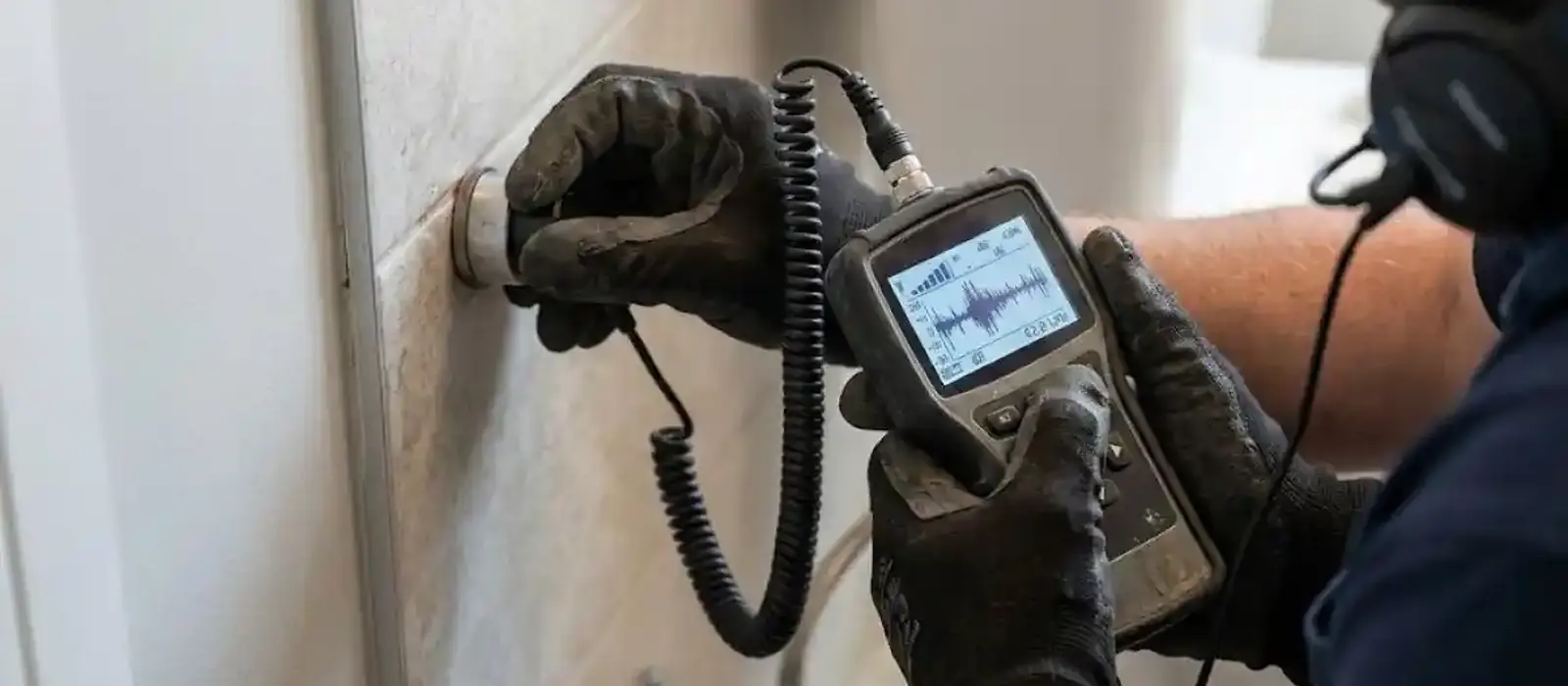
If the meter test shows a leak and you cannot find it, call. A plumber uses acoustic listening, thermal imaging and pressure testing to locate the leak. The goal is to cut as little of your home as possible.
If water is actively pouring, shut off the main and call the 24/7 line. Our burst pipe repair page lists the first steps.
Check the appliances that use water
- Dishwasher supply line and shutoff valve.
- Refrigerator ice maker line behind the fridge.
- Washing machine hoses, which should be braided and dry.
- Water heater base, relief valve and shutoff valves.
- Under every sink, including the bathroom vanity.
- Outdoor spigots and irrigation valve boxes.
Run a dry paper towel along each connection. A towel will show a slow drip that your eyes miss. Replace rubber washing machine hoses every few years, before they fail.
Use your bill as a clue
Compare this month with the same month last year. A sudden rise that you cannot explain by guests or watering is worth a meter test. Some utilities show daily use online, which lets you spot a leak that runs overnight.
If your home is on a private well, listen to the pump. A pump that cycles on and off with nothing running means pressure is dropping, and water is going somewhere.
What to do when you find a leak
Shut off the nearest valve, or the main if you cannot find it. Take photos of the damage and the source for your insurer. Dry the area quickly with towels and fans, since mold can start within days.
Small leaks at a fitting can be repaired by a plumber in a short visit. Larger or hidden leaks may need more steps. If you are unsure, call and describe what you saw.
Leaks in a home with a well or septic tank
Private wells and septic tanks change how leaks show up. A leak on the pressure side makes the well pump run more often. A leak in a drain line loads the septic tank with extra water and can flood the drain field.
In both cases, count how long the pump runs and how often it cycles. A pump that kicks on every few minutes with nothing running is telling you something. A septic field that stays soggy in dry weather may be taking more water than it should.
Call for help early. Fixing a small leak costs far less than replacing a drain field.
A monthly five-minute leak check
- Read the meter at night with everything off, then again in the morning.
- Look under each sink and around the water heater.
- Check the toilet tanks with a few drops of food coloring.
- Look at outdoor spigots and irrigation boxes.
- Scan ceilings and the walls near bathrooms for stains.
Write the meter readings on a calendar. A slow leak shows as a difference between the two readings that you can track from month to month.
Leaks and your water bill
Many utilities send a bill that shows daily or monthly use. A steady rise over several months is a different pattern than a one-time spike. A spike may be a filled pool or a long watering cycle. A steady climb often points to a slow leak.
Compare your use with a neighbor who has a similar house and family size. A large gap is worth investigating.
Standards for pressure testing
When a plumber confirms a leak with a pressure test, the method follows Uniform Plumbing Code (UPC) practice for holding a line at pressure for a set time. Ask for the test result in writing.
Leak detection questions
Do the meter test. A moving dial with everything off means a leak.
Yes. Slow leaks rot framing and grow mold over time.
Policies differ. Some cover resulting damage but not the search. Ask your agent.
You can spot signs, but locating it takes tools.
Yes. See Belen.