
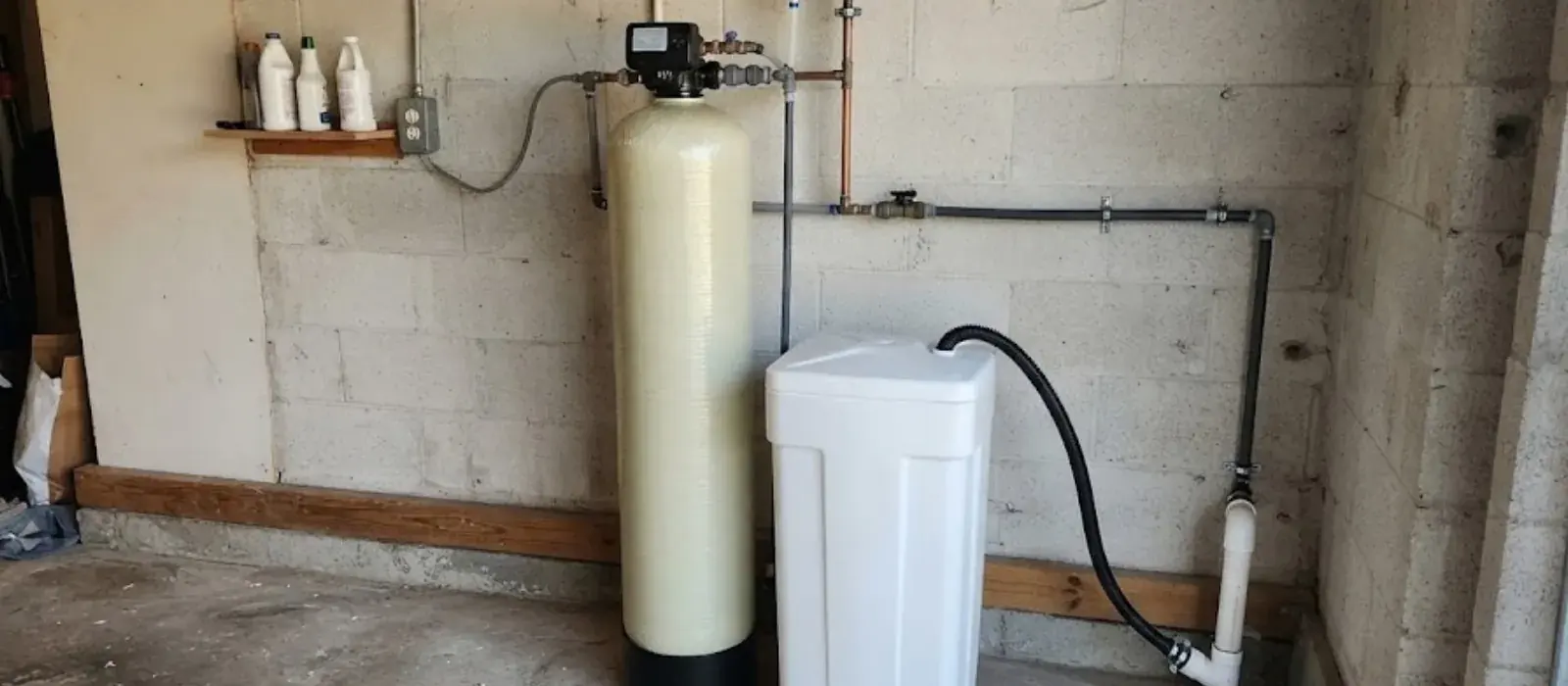
Village water or private well
The Village of Los Lunas supplies more than 6,000 water and sewer customers, drawing groundwater from the Santa Fe Group aquifer through four village wells. Its annual water quality report lists what is in the supply. We do not state a hardness number here because the Village does not publish one in the sources we checked, and your tap is the best test.
In Peralta there is no public water system. Homes rely on private wells, typically 200 to 400 feet deep, so quality varies from lot to lot. Test before you buy equipment.
What the equipment does
| Equipment | What it addresses | Good to know. |
|---|---|---|
| Salt-based softener | Hardness minerals that cause scale | Uses salt and a drain connection. |
| Sediment filter | Sand and particles | Replaced on a schedule. |
| Carbon filter | Taste and odor, chlorine | Cartridge changes needed. |
| Reverse osmosis at the sink | Drinking water contaminants | Slow flow, extra tank. |
| Whole-house filter | Broad protection | Needs periodic maintenance. |
No single device does everything. A plumber starts with the problem you want solved.
Signs you may need treatment
- White scale on faucets, showerheads and kettles.
- Spots on dishes and glass.
- Water heater that is loud or losing efficiency.
- Dry skin and dull laundry after washing.
- Taste or odor you dislike.
Scale also shortens the life of the water heater. See water heater repair if you hear popping or rumbling.
Testing first
A home test kit gives a rough hardness reading. A lab test is more complete, and for private wells it is the right move. In Peralta, the town hosted a well-testing event with the New Mexico Environment Department in 2013. Ask the town hall whether another is planned.
Bring the results to the plumber. They will size equipment to the numbers and to your household.
Installation and upkeep
A softener needs a water supply, a drain and a power outlet. A plumber places it, tees into the main line and sets bypass valves so you can service it. Salt needs refilling, and filter cartridges need replacing.
If you are remodeling, coordinate with plumbing installation so the lines for treatment equipment are planned early.
What shapes treatment equipment pricing
The plumber quotes after seeing your setup.
Equipment type and size
Households vary in demand.
Water test results
Harder water needs more capacity.
Plumbing changes
Bypass valves, drain and power.
Location
Garage, utility room or outdoors.
Maintenance plan
Salt, cartridges and service.
Treatment equipment is a home improvement and not an insurance matter. Want your real number? Tell the dispatcher what you see at the tap.
Scale, taste or well water questions?
Call to schedule a water treatment visit.
Salt, potassium and upkeep
Most softeners use salt pellets to recharge. Some households choose potassium instead, which costs more but adds no sodium. Either way, the unit needs refilling every few weeks, depending on use and water hardness.
Check the brine tank now and then for a salt bridge, a crust that traps the pellets above the water. Break it up with a broom handle. Clean the tank once a year.
Sizing for your household
A softener is sized by how much hardness it can remove before it must regenerate. More people and harder water mean a bigger unit. An undersized softener regenerates too often and wastes salt and water. An oversized one costs more up front.
The plumber uses your water test and the number of people in your home. If your water is soft already, you may not need one at all.
Drinking water versus whole-house treatment
A softener makes water gentler on pipes and fixtures. It does not remove most contaminants that affect taste or health. For drinking water, an under-sink reverse osmosis unit is a common add-on.
Ask what each device removes and what it does not. Be cautious about any claim that one device solves every issue. Rely on a lab test of your own water.
Plumbing code and treatment equipment
Softeners and filters connect to the water supply and the drain, so the Uniform Plumbing Code (UPC) applies to the backflow protection and the drain air gap on the discharge line. A plumber makes sure those are in place so brine never flows back into the house.
Water treatment questions
The Village does not publish a hardness figure in its public pages. A home test or the Village report is the way to know.
Test the water first. Wells vary a lot.
Discharge guidance varies. Ask the plumber about your system.
It depends on the filter and your water. Follow the maker’s guidance.
Yes, as an under-sink unit.
Yes. See Rio Communities.