
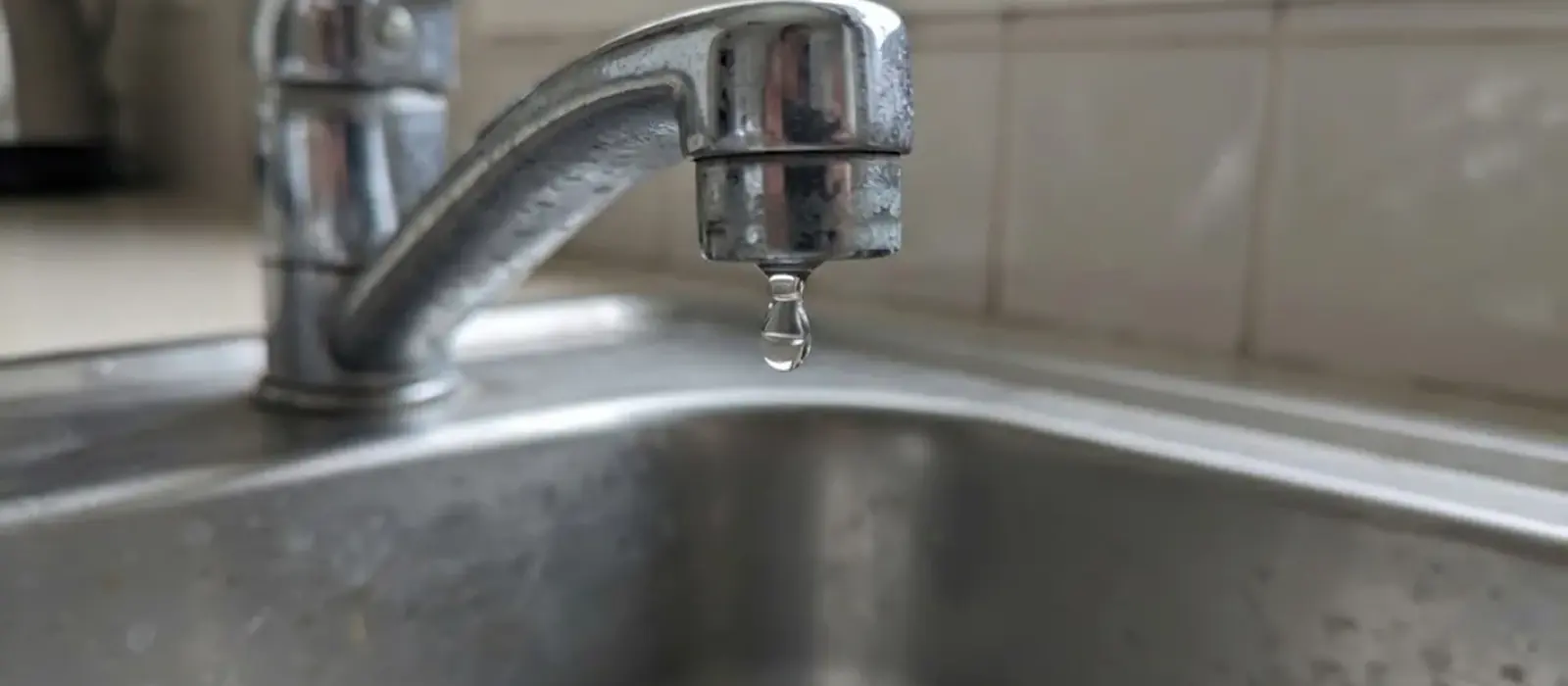
Where is it dripping
| Where | Likely cause | Typical fix. |
|---|---|---|
| From the spout when off | Worn cartridge, washer or seat | Replace the cartridge or washer. |
| At the base of the spout | Worn O-rings | Replace the O-rings. |
| Around the handle | Loose packing or worn seal | Tighten or replace the seal. |
| From the sprayer head | Worn diverter or hose | Replace the diverter. |
| Under the sink | Supply line or shutoff | Replace the line or valve. |
Under-sink water is a different problem than a spout drip. If the cabinet is wet, close the shutoff valves and see our faucet repair page.
Know your faucet type
Compression faucets have two handles and rubber washers. Cartridge, ball and ceramic disk faucets have a single handle or two and use sealed parts. The repair parts differ, so identify the brand and model before you buy.
Look for a model number stamped under the sink or on the body. If you cannot find one, take the old cartridge to a hardware store to match it.
A basic cartridge repair
- Close both shutoff valves under the sink.
- Open the faucet to release pressure.
- Plug the drain so small parts do not fall in.
- Remove the handle cap, screw and handle.
- Pull the retaining clip and lift out the cartridge.
- Install the new cartridge in the same position.
- Reassemble and slowly open the shutoffs.
If the shutoff valves do not close fully, you cannot isolate the faucet. That is a signal to replace the valves too.
When to replace the faucet
Replace the faucet if the body is corroded, the finish is flaking, parts are no longer made or repairs keep failing. A new faucet also gives you a chance to move up to a pull-down sprayer.
When you replace a faucet, replace the supply lines at the same time. Old lines are cheap to swap and costly to ignore. If your plan includes a disposal, see garbage disposal repair.
Faucet wear in Los Lunas kitchens
Groundwater minerals leave scale in aerators and cartridges. A faucet in Los Lunas that sputters or runs at low flow often needs only a cleaned aerator. Unscrew it, soak it in vinegar and rinse.
Under-sink valves in older homes, whether in Rio Communities or Belen, are often original and may fail when turned. If a valve will not turn, do not force it. Call and ask for a replacement.
What a drip really costs
A faucet that drips once per second wastes thousands of gallons over a year. That adds to your bill and, for a home on septic or a well, adds load to your system. Fixing it early costs little.
If you notice a higher bill, do the meter test described in our guide to finding leaks, or call us for leak detection.
Parts you may need
| Part | Symptom it fixes | Where to find the match. |
|---|---|---|
| Cartridge | Drip from the spout, stiff handle | Brand and model number, or the old part. |
| O-ring set | Leak at the base of the spout | Size printed on the old ring or a repair kit. |
| Aerator | Weak or spraying flow | Thread size on the spout end. |
| Spray hose | Leak under the sink on a pull-out faucet | Brand and length. |
| Supply lines | Wet cabinet | Length and thread type. |
If you cannot identify the brand, take the old part to a plumbing supply store. Counter staff can match it by eye.
Pull-down and touch faucets
Modern kitchen faucets add features that add parts. A pull-down spray head has a weight on the hose and a quick-connect fitting. A touch or sensor faucet has a battery pack and a solenoid valve.
When these fail, a plumber can usually replace the single part. Ask whether a replacement is easier, since some sensor faucets cost more to repair than to swap.
Why some drips are a warning sign
A drip from the supply side, such as under the sink, is more urgent than a spout drip. It can rot the cabinet floor and hide behind items you store there. Check under the sink once a month with a flashlight.
If you see water stains, swollen wood or a musty smell, shut off the valves and call. The damage may already be larger than the visible drip suggests.
A quick troubleshooting order
- Check whether the drip stops when you tighten the handle screw.
- Clean the aerator in case debris is part of the problem.
- Look under the sink for wet spots on supply lines.
- Replace the cartridge or washer if the spout drips.
- Replace the whole faucet if the body is cracked or heavily corroded.
Work in this order, because each step is cheaper and quicker than the next. Most drips end at step four. If you reach step five, shop for a faucet with a solid brass body and a warranty that covers the cartridge.
Saving water and money while you wait for a repair
If you cannot fix the drip today, place a bowl under it and use the water for plants. Close the shutoff valves under the sink at night to stop the loss. A drip that runs for weeks adds up on a bill and, on a private well, adds wear to the pump.
Schedule the repair soon. Parts for common faucets are easy to find, and most fixes take under an hour once you have the right cartridge.
Choosing a replacement faucet
If you replace the faucet, match the number of mounting holes in your sink. Choose a solid brass body, a ceramic cartridge and a finish that resists spots. Check that the spout reaches the center of the basin and clears the backsplash.
Keep the manual and the receipt. Cartridges and warranty claims often need the model number.
Backflow protection in faucets
The Uniform Plumbing Code (UPC) expects kitchen faucets with pullout sprayers to include a check valve that prevents backflow. If you replace a spray hose, buy the matching part so that protection stays intact.
Dripping faucet questions
A small drip is a worn seal or cartridge that is starting to fail.
Yes if the under-sink valves work. Otherwise shut off the main.
Usually a screwdriver, a wrench and an Allen key.
Repair if the faucet is sound. Replace if it is corroded or parts are hard to find.
Yes. See Bosque Farms.